Wild Trout Trust masterclass
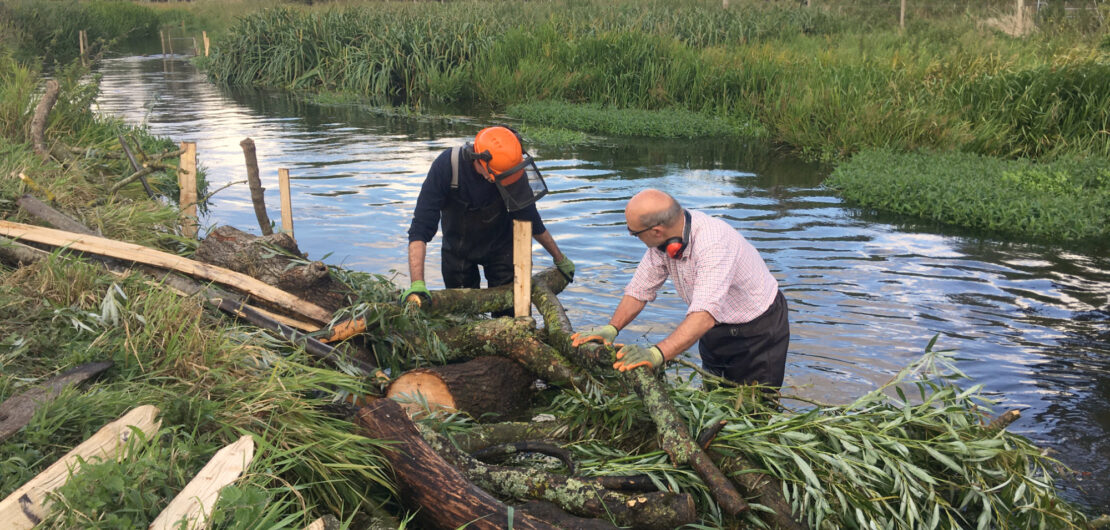
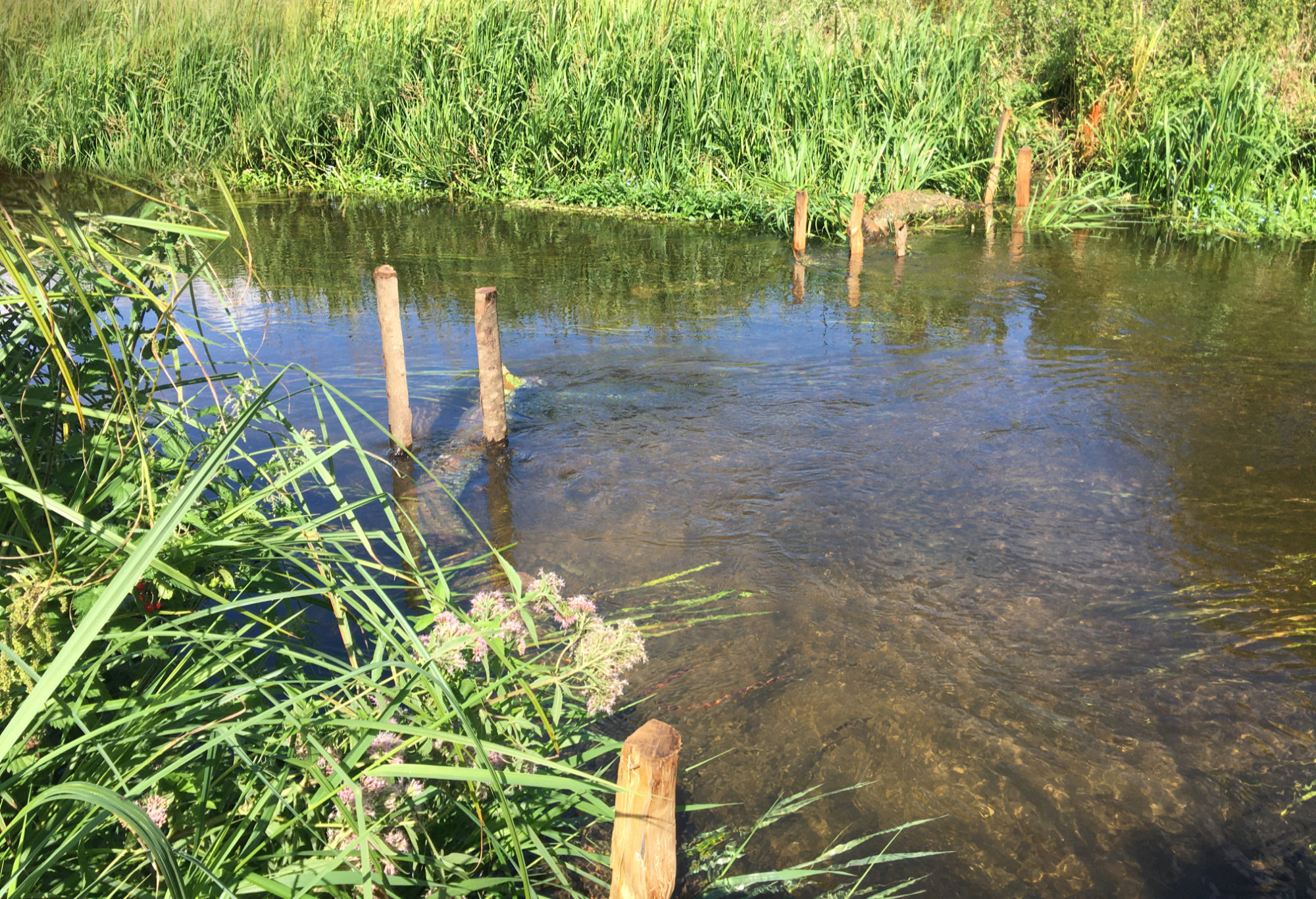
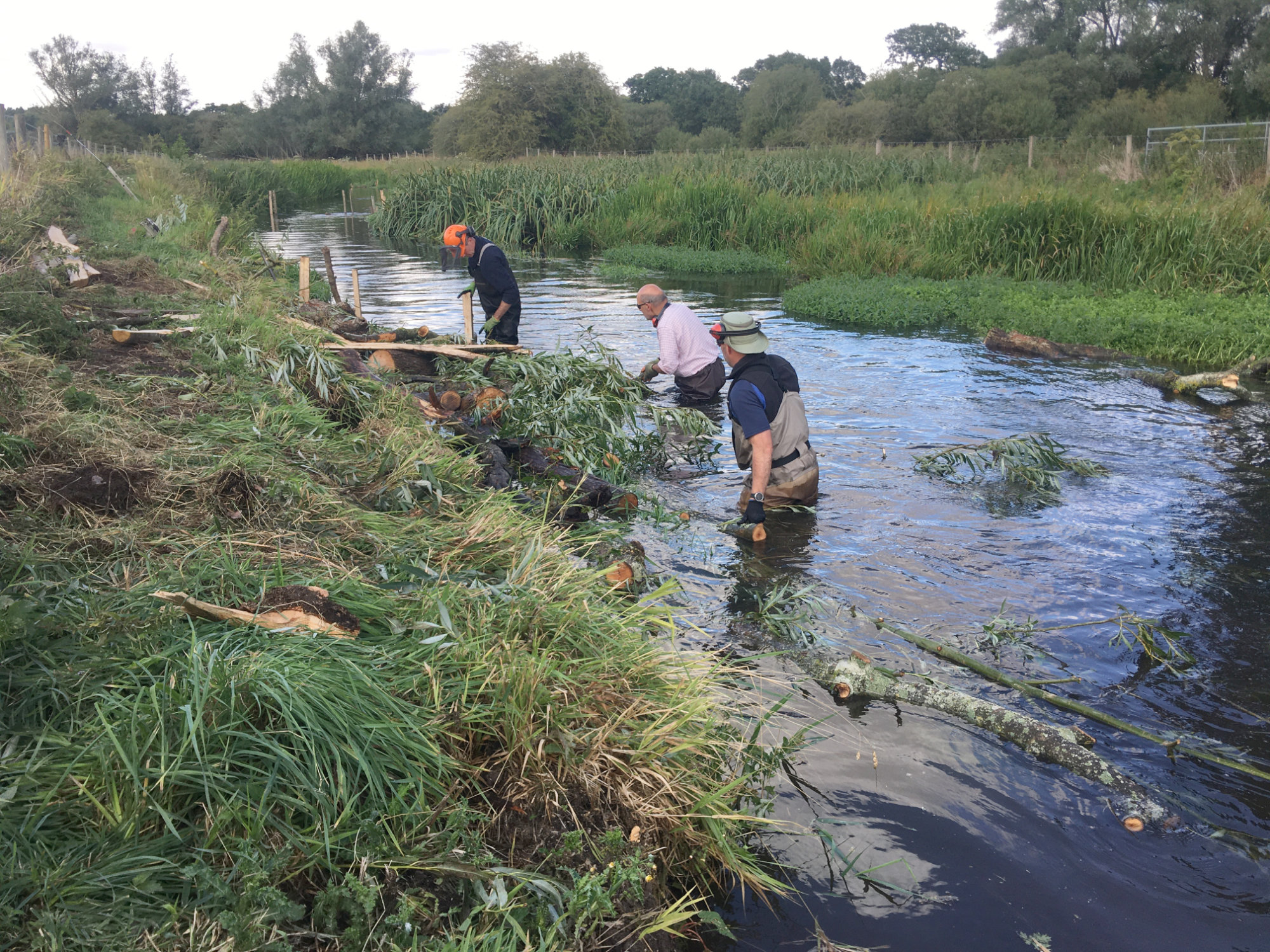
Rob Mungovan, East of England representative of the Wild Trout Trust visited the Bintry Mill Trout Fishery for two days on the 20th and 21st of August to instruct volunteers in the dark art of flow deflector installation. The work was done on the Goff’s beat as part of the ongoing improvement programme and will hopefully significantly improve the quality of the spawning gravel on the beat. Five flow deflectors were installed over the two days, using materials mostly harvested from the nearby wood which meant that the whole project was as environmentally sound as we could make it.
The river levels are remarkably low at the moment, which is generally bad news, but it did at least mean that working in the channel was easier than it might have been. As well as installing the flow deflectors we were also enable to create a fry refuge in one stretch which would have been too deep to work in comfortably in normal times. As a whole, the Goff’s beat lacks overhead cover and refuge areas for fry and immature fish, so the club is embarking on a programme of improvement to try and enhance the prospects of the river’s inhabitants. There is a significant wild trout population in this stretch of the river, so the potential for increasing the numbers is there, but far too few fish are currently surviving into adulthood.
In addition to flow deflectors and a purpose-built refuge, some large woody debris is being put into the river to add cover and increase flow variation. This is an ongoing process and will be carefully monitored over the next few seasons to ensure best results.
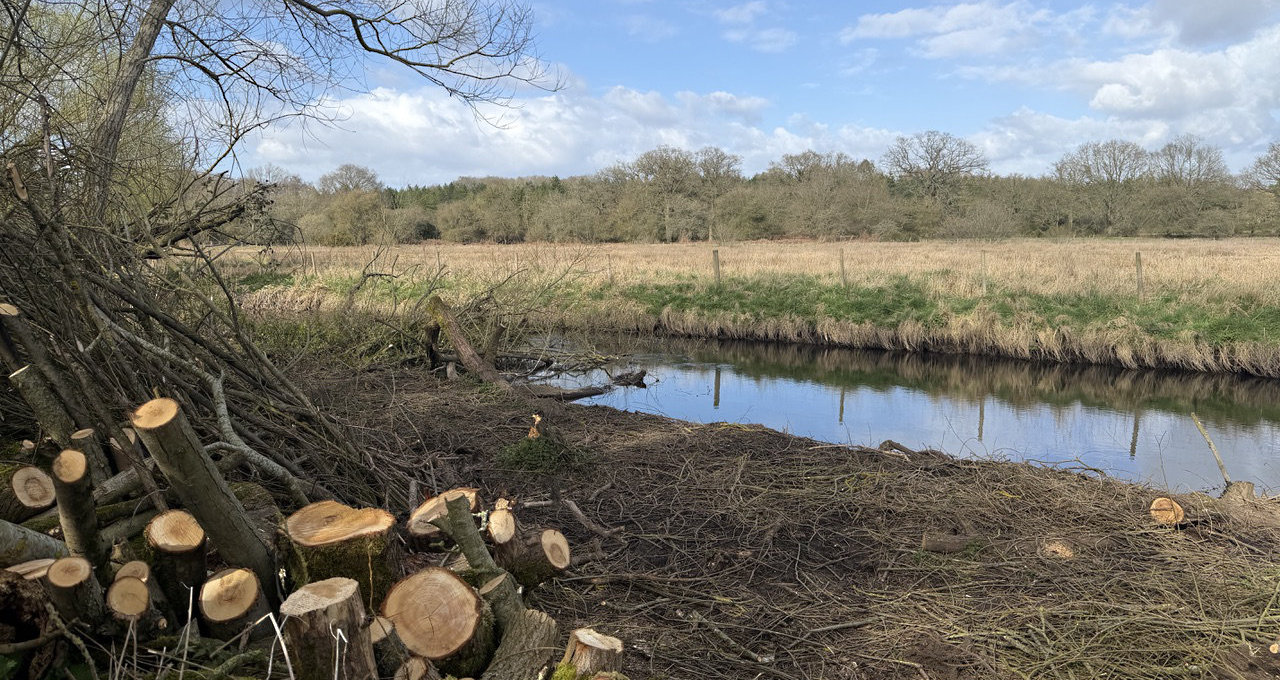
The improvement work has so far been carried out almost exclusively by club members, with a little help from the Wild Trout Trust and some additional funding from the Environment Agency Fisheries Improvement Fund. The EA have pronounced themselves very much in favour of the project and provided some very helpful advice to ensure best results and ensure minimum disturbance to the banks and river channel. The SSSI and SAC environmental designations require us to tread carefully on projects such as this, but the club has previously demonstrated the ability to achieve significant habitat improvements like this without damage.